
Have you ever tried to make an online purchase just to see your payment went down, even if your card had enough funds? In many cases, the problem is not your card – that is your billing address.
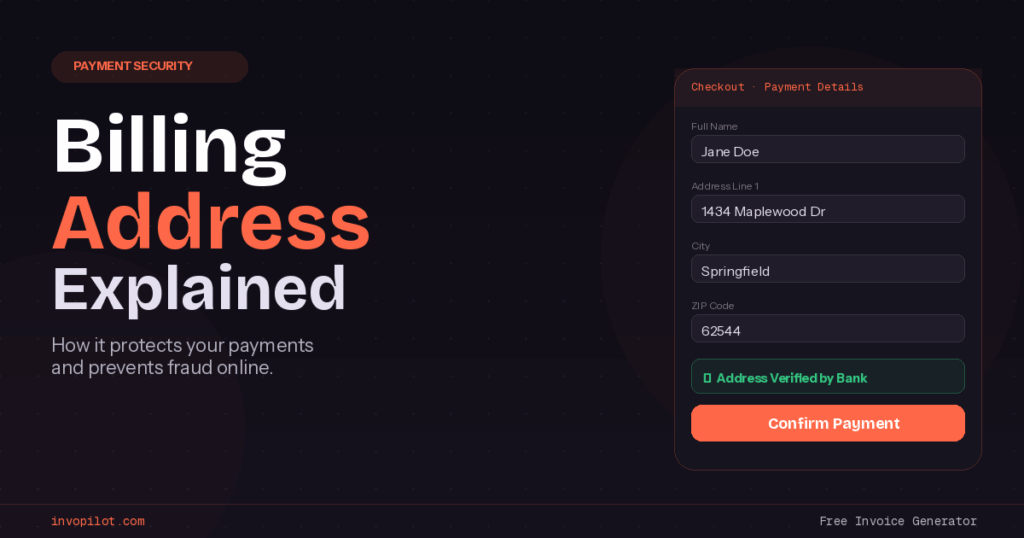
A billing address may look like just another form field during the checkout, but it plays an important role in payment security, fraud prevention and even transactions. Whether you shop online, subscribe to a service, or receive an electronic invoice from a vendor, understanding what a billing address is (and entering it correctly) can save you from failed payments and frustrating delays.
Key Takeaway: A billing address is not optional – it is important for online purchases.
What is a Billing Address?
A billing address is the physical address connected to the credit card, debit card or other payment method. This address is used by financial institutions and sellers to confirm your identity as a cardholder and to authorize transactions.
Important Points:
- Verification: When you make an online purchase, the seller sends the billing address you enter to your bank or credit card issuer.
- Scam Prevention: Your bank then compares this address with the address it has on the file for your account. If the addresses match, there is a strong indicator that the transaction is legitimate and helps prevent fraud.
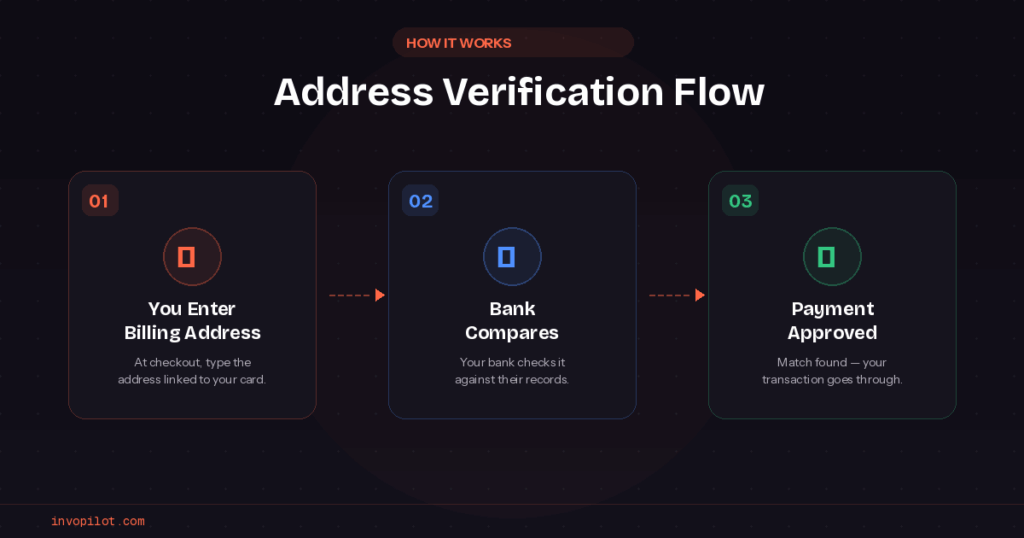
- File address: Your billing address is the specific address you have registered in the bank or credit card company. It is often, but not always, the same as your delivery address.
Why Does it Matter Alot:
Providing the correct billing address is crucial for successful online transactions. An incorrect billing address can lead to reduced payment, even if you have sufficient funds. This security measure, known as Address Verification Service (AVS), is a standard part of e-commerce safety protocols.
What Do I Put in a Billing Address?
A billing address is the address associated with your payment method, such as a credit card or bank account. When you buy an online purchase or sign up for a service, you are asked to provide the billing address to confirm your identity and prevent fraud.
While the specific fields may vary slightly from one website to another, one standard billing address follows a clear, predictable structure. Understanding this format is the key to ensuring that your payments go through smoothly.
Important Components in a Billing Address
A complete and accurate billing address usually includes the following components:
- Full Name: The full name of the credit card holder or account owner.
- Address Line 1: Your primary street address. This includes street names and house numbers (eg “201 Main Street” or “436 Reas Avenue”). For companies, this can be the building name.
- Address line 2 (optional): This line is for further details that do not fit on the first line. Common examples include apartment, suite, unit or floor (eg “apt. 34b,” “Suite 350,” or “Unit 30”).
- City: The name of the city or town where you are resident.
- State/Province: The state, province or region. This is often an abbreviation (eg “ca” for California or “On” for Ontario).
- Postal code/zip code: The five -digit zip code for the United States or alphanumeric postal code for other countries.
- Country: The country where the billing address is located.
Example of a Billing Address
Here is a clear, formatted example showing how to structure a typical billing address:
Full Name: Jane Doe
Address Line 1: 1434 Maplewood Drive
Address Line 2: Apt. 1C
City: Springfield
State/Province: Illinois
ZIP/POSTAL CODE: 62544
Country: USA
Does the Billing Address Matters A lot? Why Is It So Important?
When you buy anything online, you may be wondering why the billing address is the required area. It looks like a small detail, but it is a very crucial component of the payment process. The billing address is not just formal fame; It plays an important role in payment verification, transaction approval and general security.
Payment Confirmation
The billing address is the primary payment verification tool. When you enter the card details and billing address, the payment port sends this information to your bank. The bank system then crosses the address you have given on the file for your account. This simple investigation helps confirm that the person who buys is a legitimate cardholder, which significantly reduces the risk of unauthorized transactions and credit card fraud.
Transaction Approval
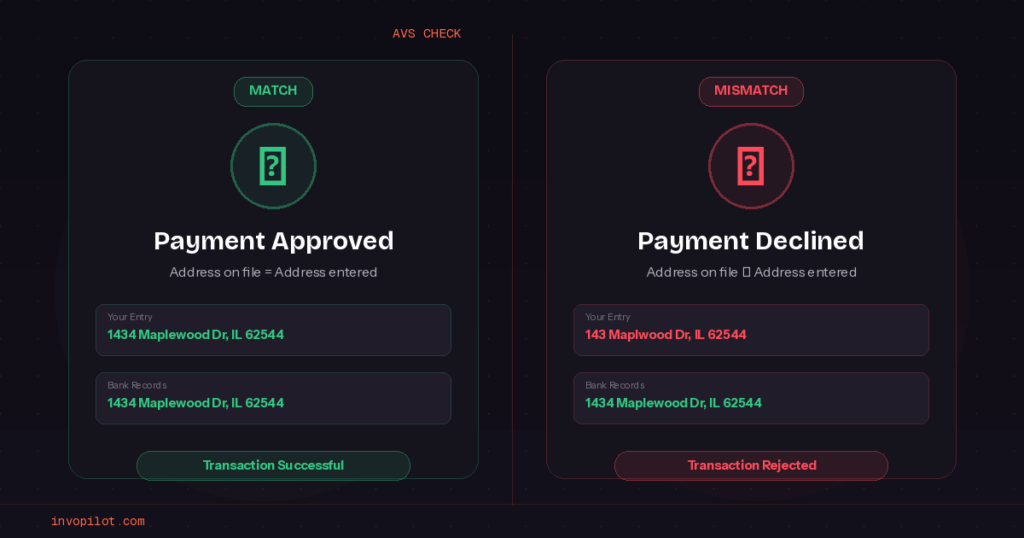
Incorrect billing addresses can be an important barrier. If you do not match the specified billing address on your bank file, the transaction can be ruled out. According to invoice statistics, payment failures and delays remain one of the top financial frustrations for both businesses and customers. This is a built -in security measure designed to protect you. Nevertheless, all other details, such as card number and CVV are correct, one matching in the billing address is often sufficient to flag the bank as suspicious and prevent it from passing.
Security
The billing address acts as a firm team for both you and the seller. For you, it will add a barrier to the dishonest use of your card, especially if it is stolen. For the seller, it provides a level of assurance that they deal with the actual cardholder, which helps them avoid compensation and economic losses from dishonest purchases — especially when paired with clear invoice payment terms that set expectations upfront. This easy step helps everyone create a safe nail shopping atmosphere.
In short, an incorrect billing address is one of the common causes of failed online payments. Although it may seem like a minor detail, it is a fundamental part of fraud prevention and security protocols used by banks and online stores. To ensure that an even cashier experience is always a double check as the billing address you enter is an accurate match with the one associated with your credit or debit card.
Are you an e-commerce business owner? Billing address verification is a key component of a robust fraud prevention strategy. Invopilot provides advanced tools to help you verify customer information, including billing addresses, to reduce chargebacks and protect your business.
Learn more about Invopilot Free Invoice Generator.
Billing Address vs. Shipping Address: What’s the Difference?
| Aspect | Billing Address | Shipping Address |
|---|---|---|
| Primary Purpose | Verifies payment and prevents fraud. | Determines where the package is delivered. |
| Associated with | Your payment method (credit card, bank account). | The physical location for delivery. |
| Security Role | Crucial for identity verification. | Ensures correct delivery, but doesn’t verify identity. |
| Flexibility | Must match the address on file with your bank. | Can be different from your billing address (e.g., a gift). |
| Common Errors | Mismatched addresses, typos, outdated information. | Typos, incorrect unit numbers, wrong ZIP codes. |
Understand the difference between billing address and shipping address for a simple shopping online purchase experience. When they are always the same, knowing their different roles can prevent payment problems and delivery problems. What’s the Core Distinction?
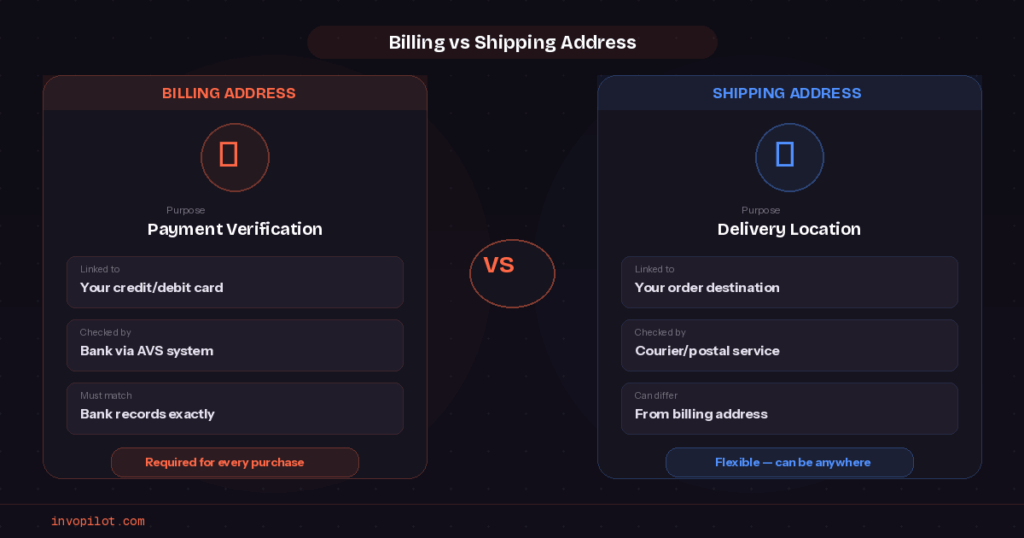
Billing Address
As mentioned above, it is an address connected to a credit card or payment method that is used for purchase. Its primary purpose is to test the cardholder’s identity to prevent fraud. When you enter your credit card information, the payment processor checks that the billing address you provide matches one on the file with your bank. If they do not match, the payment can be ruled out.
Also Check: Credit Card Statistics for 2026
Shipping Address
Shipping address, also known as delivery address, is where you want your purchased items to be sent physically. It is a place where a courier or postal service package will be delivered. This address is used only for logistics purposes, make sure your order comes to the right destination.
When Can They Be Different?
While many online purchases have the same billing and shipping addresses, there are several common situations where they will vary:
- Send a gift: You can buy a gift for a friend or family member and have it sent directly home to them. In this case, your billing address remains, but the shipping address is theirs.
- Shipping to another location: You may want to have an item delivered to your workplace, a holiday rentals or a friend’s house while gone. Your billing address remains the same, but the shipping address changes to the temporary location.
- Recent move: If you have recently moved but have not updated your billing information with your bank, you may need to use your old address as a billing address while entering your new address as a shipping address.
Why Is It Important to Know the Difference?
Understanding the difference is the key to avoiding two big online shopping frustrations:
- Incorrect Payment Approval: a discrepancy between your specified billing address and the one on file with your bank will almost always lead to a rejected payment. This security measure, known as the address verification system (AVS), protects both you and the seller from dishonest transactions.
- Delivery Delays or Lost Packages: Incorrect shipping information can cause significant delays or even result in a lost package. The delivery service depends on the exact shipping address you enter. An error can cause an incorrect delivery or package to be returned to the sender.
In short, getting both addresses correctly ensures that your payment is processed with success and that the package comes safely to the intended destination.
What Happens If My Shipping Address Is Different Than My Billing Address?
It is common for your shipping address to be different from the billing address, and in most cases this is not a problem. E-Dealers and payment processors are used to customers sending goods to a workplace, a friend’s house or a P.O. Box, while the credit card billing address is bound to the home.
Also Read about Dealer Invoice
Potential Issues You Should Be Aware Of
Although this practice is generally nice, a few potential snags may occur:
- Scams: Some dealers, especially those who sell high value goods, may have automated systems that flag orders with different billing and shipping addresses for manual review. This is a security measure to prevent fraud by credit card. If this happens, your order may be slightly delayed while the seller verifies the purchase and they can even contact you to confirm the details.
- The Transaction Rejected: A key point to remember is that the billing address must be correct. The payment processing system uses the billing address you enter to confirm that you are the legitimate card holder. If the billing address you do not exactly match matches the address registered with your credit card company, the transaction is likely to be rejected, regardless of the shipping address.
Best Practices for a Smooth Transaction
To ensure your order goes through without any problems, there is always a good idea to:
- Double Check Everything: Before you finish the purchase, you can take a moment to confirm that both the shipping and billing addresses are entered correctly.
- Know the Seller’s Guidelines: Some companies have specific shipping guidelines for non-invoice addresses. If you are worried, a quick look at their FAQ or shipping policy page can provide clarity.
By following these simple steps, you can safely make purchases and send them wherever you need without unexpected problems.
Common Billing Address Problems and How to Fix Them
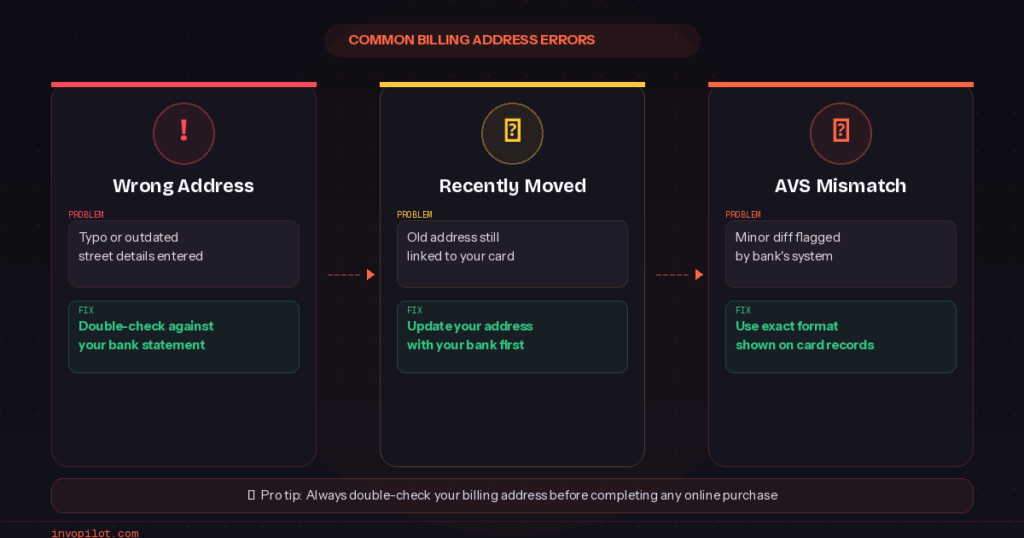
Have you ever had a frustrating moment in the box, just to have your card rejected? Often, the fault is a simple error with your billing address. An incorrect address can lead to transaction failure, and even trigger fraud alerts. Understanding these common problems and how to solve them can save you time and care. Here is an overview of the most frequent billing address problems and their simple solutions.
1. Incorrect Billing Address
Problem: You have entered a billing address that does not match the one with a bank or credit card company. This is a common question, especially when you have multiple addresses or have recently moved. Even a minor deviation, such as an abbreviation or a typo, can cause a transaction to fail.
Solution: It is very simple: You just need to verify your details.
- Double-Check Your Statements: Pull out your recent bank or credit card statement. The billing address is usually printed on it.
- Review Your Card Details: Some card providers have the address linked to your online account. Log in and confirm the exact details they have on record.
- Re-Enter the Information Carefully: Pay attention to street names, numbers, and apartment or suite numbers. Even a missing “E” or “W” can make a difference.
2. Recently Moved
Problem: You’ve moved to a new home, but your billing address is still the old one. This is a very frequent supervision that can cause repeated transaction failure.
Solution: Update your information with your financial institution.
- Contact Your Bank or Credit Card Company: Call on the customer service number mentioned on the back of your card. Inform them that you have a new address and ask them to update it on your account.
- Use Online Banking Portals: Many banks and credit card companies allow you to update your personal information, including your address, through their secure online portals.
- Do It Before You Shop: To avoid the frustration of a declined transaction, make sure to update your billing address with your financial institutions as soon as you move.
3. Card Declined Due to AVS Mismatch
Problem: AVS (Address Verification System) is a fraud prevention tool used by merchants. It compares the billing address you enter with the one your bank has on file. When there is a mismatch, AVS flags it, and the transaction is declined. This can happen even with minor inconsistencies.
Solution: Ensure perfect alignment between your input and your bank’s records.
- Exact Match is Key: Re-enter your billing address exactly as it appears on your bank statements or card details. Pay attention to abbreviations (e.g., “St.” vs. “Street”), and include any apartment or suite numbers.
- Contact Your Bank: If you’re confident you’ve entered the correct address but the issue persists, call your bank. There might be a technical issue on their end, or they might have an outdated address on file that you’re unaware of.
- Use PayPal or Digital Wallets: For some online stores, using a digital wallet like PayPal, Apple Pay, or Google Pay can sometimes bypass AVS issues, as they use their own verification systems.
By being mindful of these common issues and taking the right steps to fix them, you can ensure a smoother and more secure online shopping experience.
Conclusion
The basic difference is simple, but decisive: a billing address is used for payment verification, ensuring that the person who makes the purchase is the cardholder. Meanwhile, the shipping address where your order is physically delivered.
Having accurate addresses is important for a smooth and safe online shopping experience. Providing the correct billing address helps prevent dishonest transactions and ensures that your payment is processed without any problems. The correct shipping address guarantees that the package comes safely and in time in the desired place. Any deviations can lead to unsuccessful payments, delayed deliveries or even lost packages.
Double check Always the billing and shipping addresses before completing a purchase.
Create Invoices Instantly – Free & Easy!
Generate professional invoices in seconds with our Free Online Invoice Generator.
👉 Try the Invoice Generator Now